
Thank you to all who submitted entries for the Short Story Competition, and congratulations to those who gained first and second place in their category. Read some of them here:
Children – Years 6-8
First: – The Rain by Sam Tait. Mahana School
The Rain
In the year 2234, Earth was no longer the only inhabited planet in the solar system. Colonies sprawled across Mars, Europa, and even the floating cities above Venus. But something strange had started to happen-first in the outer colonies, then spreading inward toward Earth.
They called it the Astrid Rain.
It wasn’t water or ice. It wasn’t even meteor dust. The Asteroid Rain was a shimmering cascade of microscopic particles, descending slightly from the upper atmosphere in waves of iridescent light. At first, scientists thought it was a side effect of interstellar mining-residue from the asteroid belts. But it didn’t behave like any known material.
The rain had… effects.
On Mars, the first recorded Asteroid Rain coincided with an unexplainable surge in plant growth inside biodomes. Crops bloomed overnight. On Europa, scientists studying sub-ice oceans found that bacteria exposed to the rain evolved at a thousand times the normal rate-some even developed bioluminescence within days.
Earth was skeptical – until it came home.
On August 17, 2236, the skies over the Pacific began to shimmer with eerie colors. Thousands gathered to watch the skies as waves of multicolored particles poured gently through the atmosphere. It was beautiful-like the Northern Lights had begun to fall.
Then the dreams began. People who had stood in the rain reported vivid dreams of alien cities, starless skies, and strange, whispering voices. Artists started painting impossible landscapes. Scientists began to hear patterns in background radiation-signals, maybe. Messages.
Within weeks, humanity understood: the Asteroid Rain wasn’t random. It was a delivery.
Encoded within the particles was a kind of biological message-a seed of thought, wrapped in DNA-like strands. It was as if something, somewhere, had figured out how to deliver knowledge not through words or light, but through living memory.
A consciousness, embedded in rain.
The UN formed the Astrod Accord, assembling the best minds to decipher the rain’s content. What they discovered changed everything.
It was an invitation.
An ancient civilization, long since ascended beyond physical form, had seeded the galaxy with these “rains” for millennia. Not all species survived the encounter. But those who did-those who listened, who dreamed-were granted entry into something vast and eternal.
Earth had been chosen. Or maybe…..Earth had finally heard.
Second:- The Baking Rivals by Grace Lewis-Jones. Māpua School
Young Adult
First: The Voices by Ruby Maxwell. Motueka High School Writing Group
Second:- The Clock in The Square by Evelyn Cane. Motueka High School
Adult
First:- The Quarterly by Steve Richards
The Quarterly
As the new millennium dawned, Katherine McMaster thrust the letter towards her best friend. “Look at this,” she said. “He stands to inherit the lot.”
“What? All of them?” An incredulous expression covered Janet’s face.
“Yeah, every last one, I suppose.” Katherine looked despondent and her gaze fell away from her celebrated father’s familiar handwriting. The letter had fallen into her hands by accident, or so she thought.
“That collection must be worth a fortune,” said Janet, “especially the exchange between Curnow and Baxter in those early 1948 and 1950 editions. Those reviews for the Claxon Poets, congratulating each other on their own brilliance.”
“Oh, yes,” said Katherine, wistfully. “But they were, weren’t they? There was Denis and Maurice, and Frank and Ruth and Lauris and, yes, Charles himself did a bit of reviewing. Those early days, it must have been so exciting to be a writer.”
“And your father contributed too, later on. It’s like a who’s who of Kiwi writing. And he kept every single edition.”
The mention of George brought a slow tear to Katherine’s eye. As the old man of letters died intestate, her grief had to compete with the unseemly wrangling that had developed with her brother, Peter, about who might lay claim to the legacy of a great Kiwi writer. And the jewel in the crown was George’s complete, pristine collection of every edition of The Quarterly*, New Zealand’s leading literary journal founded in 1947. The collection’s future was the subject of widespread speculation among the nation’s literary circles. Some of the older editions were extremely rare, and allegedly, collectors worldwide were prepared to pay a small fortune for them.
“You should have them, Katherine, “said Janet. “You’re a writer, his proper heir. What’s Peter got to do with it? He’s a window cleaner.”
“I know, Janet, but this letter from Dad. It says clearly that he intended Peter to inherit the collection.”
————
“Do you think she fell for it?”
“I don’t know, Peter. But the handwriting is spot on. You must have been practising for years.”
“I was, I mean I did. Actually, Gordon, it wasn’t me.” Peter felt a rolling sensation in his stomach as he thought about his deception.
“It wasn’t you? Who was it, then?”
“I can’t tell you.” He raised his finger to his mouth. “Let’s just say I had some help.” He smiled lamely, and Gordon, always the loyal friend, whistled softly and let it go.
Leonard had been so persuasive. He had promised Peter he would never be short of a window to clean if he just went along with it. And he had agreed to tell no-one. Who would have guessed that Leonard Tomkins, the former editor and already a well-regarded poet himself, would stoop to such an abuse of the memory of a literary icon? But because his predecessors at The Quarterly had failed to maintain a complete archive and McMaster senior had the only known full collection, Leonard of all people knew its value in the rare volume market. He knew that Peter himself had no idea and would hand over the collection for the proverbial trinket when asked.
All the same, Peter felt wretched about the whole business because, even though he had seen little of his big sister since her own literary successes, he loved her. He would replay in his mind those family outings to the Hokianga to watch the bottlenose dolphin giving rides to the children, although he never had the courage to try. But his adventurous sister did, and he grew up feeling that Katherine was the apple of his father’s eye.
————–
Katherine and Janet stood on the steps of the courthouse. Katherine glanced up at the pillars and portico of the imposing building. “Are we doing the right thing, do you think?” she asked as they dithered on the bottom step.
“Oh,” said Janet, “here comes the press, if I’m not mistaken.” A young man approached, notebook in hand, while an older man wielding a video camera and microphone labelled ‘One News’ followed, breathing heavily.
“Ms McMaster, can you tell us why you are in court today?”
Katherine was flustered, despite her years of experience with the media, publicising her own work. Her mouth opened but nothing came out, and she fled up the steps, followed by Janet and the persistent journalist.
“Do you have anything to say to your readers?” asked the young man.
“It’s a personal matter,” said Katherine, and pushed the court door open. “Now leave me alone.”
They entered and met Katherine’s lawyer, who had advised her that when someone dies intestate with no surviving spouse, the heirs share the estate equally. But, where there is a dispute over a specific item, the inheritance may be challenged in court. She was reluctant to take such measures against her own brother, but he had been unfriendly when she asked him if she might have the collection, and he didn’t explain why.
“I don’t want to talk about it, Katherine,” he had said.
The two women sat on the cold leather seats outside Courtroom 1. Along the corridor, Katherine recognised Leonard sitting next to her brother. She wondered if he was being called as a witness. Her lawyer came to brief her, and they settled in to wait.
————
“Why the hell did you do that?” Leonard was furious, his face even redder than usual as he stormed out of the courtroom with Peter. Emerging from court, Katherine and Janet walked confidently past them and as they did so, Peter said clearly, so his sister might hear, “I did it because I love my sister, and she deserves to have the collection. And because what we did was wrong, Leonard.”
Katherine smiled, and mouthed “thank you,” to her brother. In the corridor, on the cold leather seats, the young journalist concentrated on his notes for the evening news bulletin.
*The Quarterly is a fictional publication.
995 words
Second:- Loss is Never Easy by Michael Brown
Loss Is Never Easy
Pam was struggling down the stairs. I parked, sucked in a breath, ready to tell her the truth.
She had a handkerchief to her nose. Red eyes told me my timing was all wrong. Damn it.
“I’ve had the vet here twice. He says Tyson needs to be put down.” Her lips quivered.
“Oh, Pam. I’m sorry.” I moved to hug her. She pushed me away.
“What’s wrong with him?”
“I don’t want to talk about it. Okay.”
“Have you told Gary and Neil?”
“They’re coming in the morning.”
“I’ll help.” I tiptoed down the stairs and slept in the holiday accommodation, tossing and
turning, wondering when to tell Pam. After twenty years, there’s never a right time.
At dawn, I sat on a fallen gum log. Tyson sauntered over, snuffled into my ear, and rubbed
against my neck. He always came when I leaned on the fence rail.
Pam called from the deck. “Neil just phoned – he’ll be a bit late.”
Neil was a digger driver. He knew the drill.
Macho Gary, straddled the boundary fence and strode toward me, his 308 Winchester slung
over his shoulder. We walked beside Tyson. No words.
Gary was ten years younger but looked older. His thinning ginger hair offered no sun
protection. A competitive eventer in his day, his horsemanship was solid. But when it came
to the crunch, he had no qualms about putting his 308 to work. At home, he preferred selling
unwanted nags for dog meat – less messy. He valued his life too much to mention that option
to Pam.
He shot Tyson clean as a whistle. I jumped. Tyson’s knees buckled; he crumpled to the
grass. His body stiffened, shook like a clenched fist, then let out a final wheeze.
Gary turned and walked away. If his weapon had been a six-gun, I reckon he’d have blown
smoke from the barrel, twirled it, and holstered it like he’d just cleaned out the O.K. Corral.
Back on his property, he surprised me – sat on a hay bale wiping his eyes. Maybe he was
human. Just didn’t want to show it.
I looked down into Tyson’s big brown eye and shook, thinking how many kids he’d
comforted over the past thirty years.
Pam stayed inside, but must’ve heard the Winchester’s crack echo from hedgerow to
hedgerow. I felt for her. She loved that horse.
I wandered back but didn’t go up. Instead, I scooped wheat from the hay shed and sat by the
water trough, feeding Ustinoff, our Rhode Island Red rooster. He just turned up one day and
never left. He pecked, and cackled, half listening as I told him my troubles.
Neil’s truck and 8-ton excavator were easy to spot coming through the storm-ravaged gum
trees. He waved and headed for the west paddock.
A cartage contractor, he ran the local shingle plant by the Motueka River. More social than
Gary, I often rubbed shoulders with him and his small dog at the Mot Hotel on raffle nights.
Short, nut-brown, always in jean shorts and bushman’s singlet. Everyone liked Neil.
He parked near where he’d buried the last one a year ago. I gave him half an hour to start
digging. Ustinoff carried on scratchings. I strolled over. Neil idled the motor when I arrived.
I glanced back – Pam was tottering toward us with a walking stick. After the accident, her
sciatic nerve gave her jip.
Loss is never easy
2
Neil didn’t look happy.
“What’s the matter, mate? Are you crying?”
He blew his nose into a rag cut from an old singlet.
“Jesus Neil, what’s wrong?” I asked, almost pleading.
He glanced at Pam, now just meters away. I leaned in.
“For God’s sake Neil, you’ve dug graves for heaps of horses. Pull yourself together, man.
Pam’s here.”
He wiped his eyes, pulled his Ray-Bans down off his Downers cap, and was about to pick
up Tyson with the clamp bucket when Pam tapped his singlet.
“Just be careful, Neil. Go gentle on him, will you?”
Neil nodded. With utmost care, he cradled Tyson between the bucket and clamps, lifted, then
lowered him into the hole. He placed him lying down. Pam peered in, toes over the edge.
Neil sprinkled the first few buckets of soil, patted it down, then added more until the job was
done. Pam lifted a towel to cover her face, eyes squeezed shut. Her shoulders rose and fell in
tune to her sobs before she turned and walked back to the barn. Alone.
I couldn’t help thinking – there’s more going on in Pam’s mind than burying an old horse.
I handed Neil his cash.
“Geez, Neil, you don’t make it easy, mate. Fair dinkum.”
Then I saw his bloodshot eyes.
“What the hell’s the matter?”
He couldn’t hold back anymore.
“Jack didn’t wake up this morning, Brownie.”
“What?” I couldn’t process it. Who the hell was Jack?
“I called out. He didn’t come. There he was on his mat, stiff as a board.”
“I’m so sorry, Neil.”
“Sixteen years young, I reckon. Not bad for a Jack Russell. We must’ve driven a million
miles together. Him sitting right there in that seat beside me.”
I never knew his dog’s name, but I’d seen him often – always in the shotgun seat, looking
out like he owned the place.
“You’re gonna miss him for a while, Neil. He was a good mate, wasn’t he?”
And with that, I left Neil to it.
Out in the paddock, I parked myself on a bundle of second-hand fence posts. Gypsy, our
dog, with a flyblown lamb’s tail to chew on, sat just out of reach. Neil drove off through our
splintered wasteland.
What a morning.
I felt for Neil, losing his best mate. I thought of Pam, her grief layered and silent. Loss
doesn’t wait for the right moment or offer clean exits. Whether it’s a horse, a dog, or your
wife of twenty years – loss is never easy.
Māpua Community Library Literary Festival 2025. Friday 12 September through to Sunday 14 September at the Māpua Community Hall, Aranui Road, Māpua.
The 7th Māpua Literary Festival is organised by volunteers from the library and features local writers from the Tasman & Golden Bay areas as well as Wellington and Auckland. The theme this year is Love, Lies and Legacy. Authors include: Gerard Hindmarsh, Michael Bennett, Tom Rowling, Erin Palmisano, Olive Jones, Anna Riedel, Kerry Sunderland, Bruce Cole, Jennifer Hassloch and Jenny Pattrick.
Conversationalists: Adrienne Taylor, Chris Stuart, Steve Henry, Kerry Sunderland, Liz Price and Elaine Fisher.
There is also a Love, Lies & Legacy short story competition open to all Tasman and Golden Bay writers. There are 3 categories: children (Years 6-8), young adults (Years 9-13) and adult (over 18 years). Closing date for entries 7 September. Full details and entry form here:
Friday 12th September Opening night: from 6.30pm wine and nibbles (cash bar).
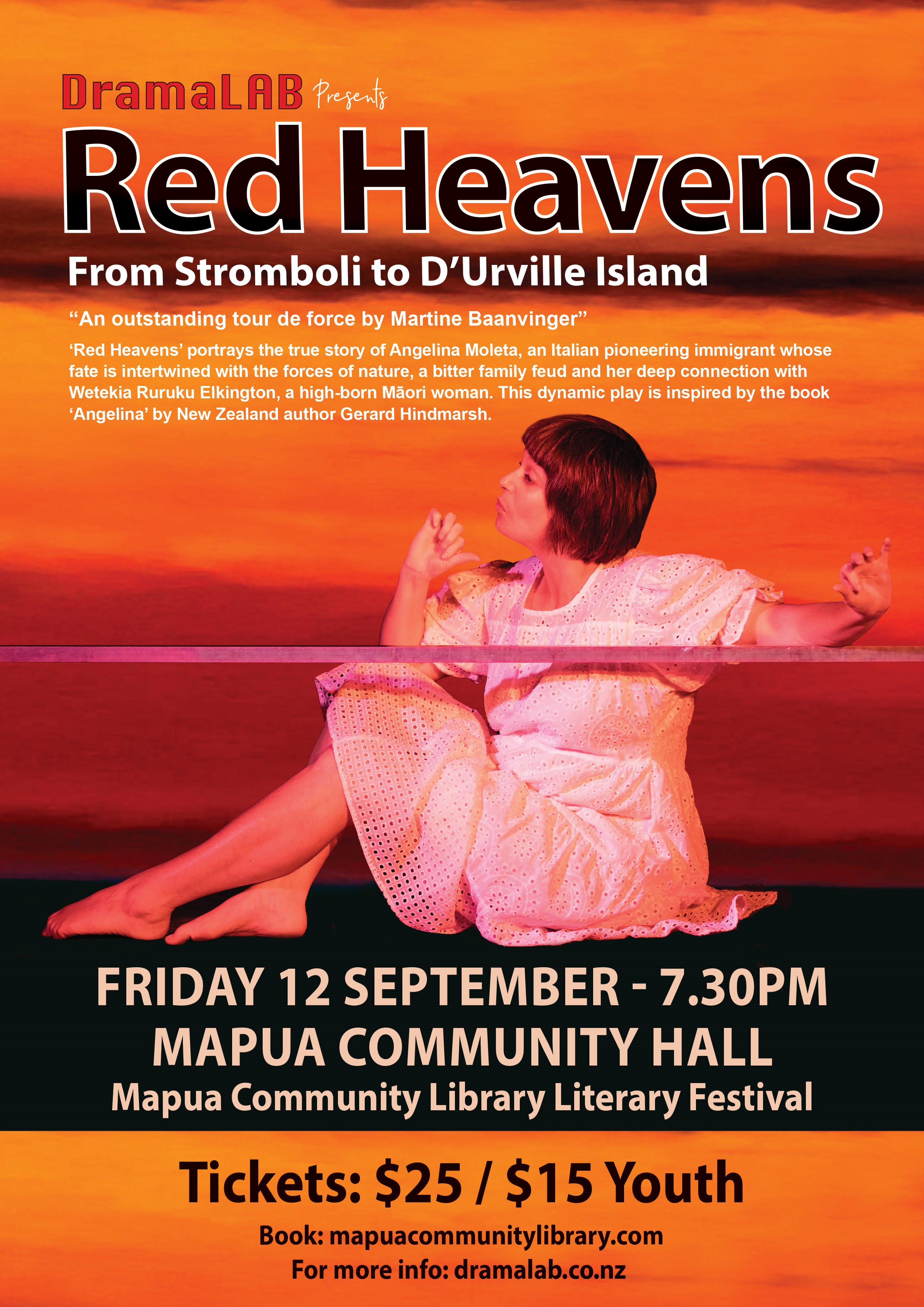
7:30pm The event starts with Martine Baanvinger’s solo performance “Red Heavens”. Tickets – $25. Sold out.
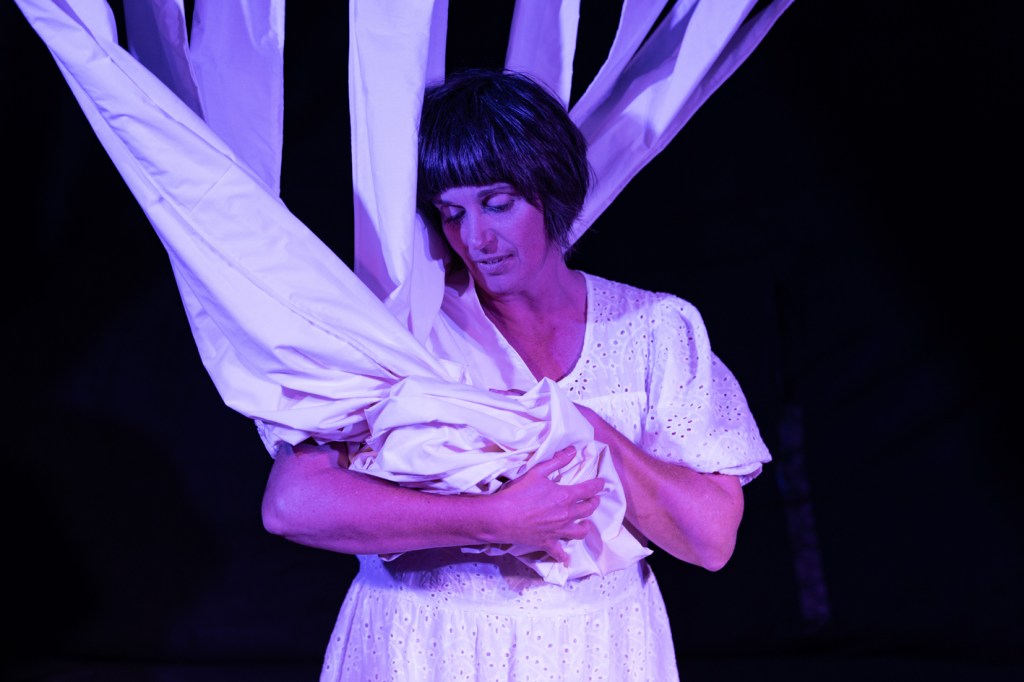
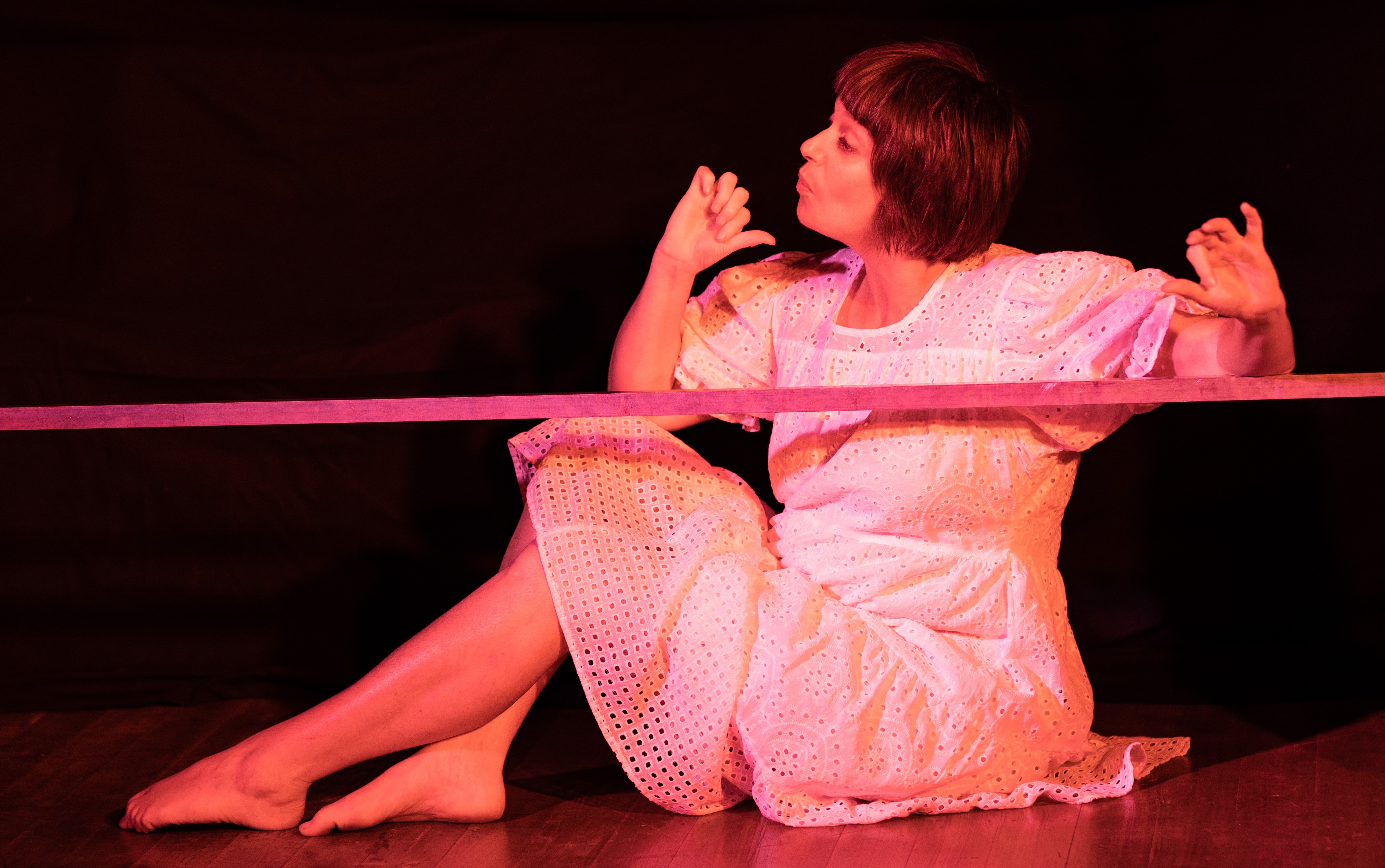
From Stromboli to D’Urville Island, Martine brings a powerful, dynamic and passionate solo show to the stage. “Red Heavens” portrays the true story of Angelina Moleta, an Italian pioneering immigrant on D’Urville Island, whose fate is intertwined with the forces of nature and her deep connection with Wetekia Ruruku Elkington, a high-born Māori woman. Growing up on the active volcanic island of Stromboli, she is betrothed to her cousin who brings her, in the year 1906, to the even more remote D’Urville Island in the Marlborough Sounds. Through hardship and an unlikely friendship, she grows into womanhood and motherhood.
This dynamic play is inspired by the book Angelina by New Zealand author Gerard Hindmarsh who wrote the book about his grandmother.
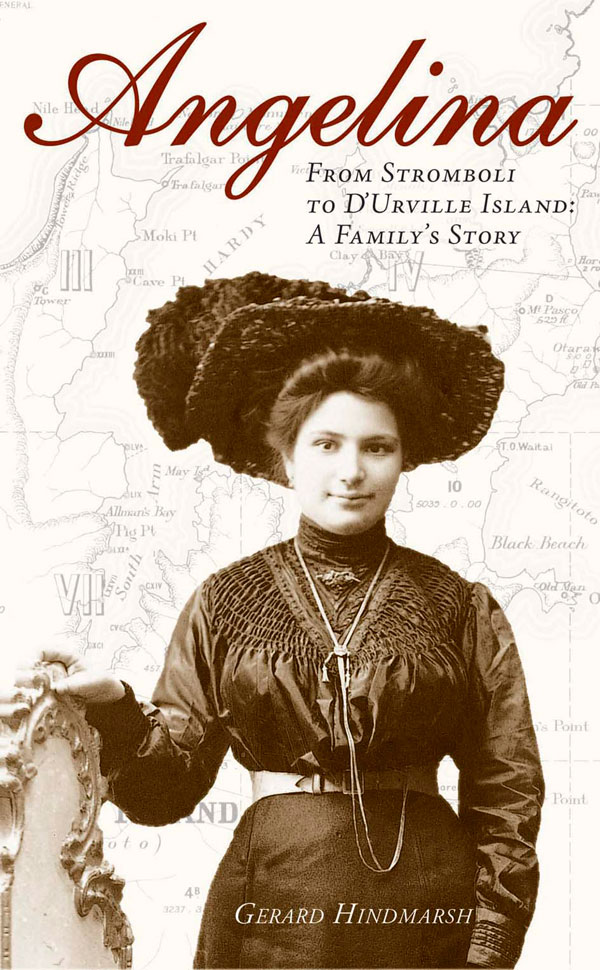
Saturday 13th September. Day One:
10.00-11.00am: Gerard Hindmarsh – new book – Hard-Case Heroes – Stories from the Abel Tasman. Release- Sept/Oct 2025. Conversationalist – Adrienne Taylor.
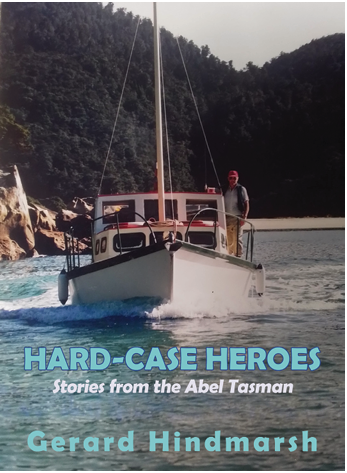
Building on the success of his Kahurangi backcountry trilogy, Gerard Hindmarsh’s latest book focuses on some of the quirky and largely untold characters associated with the Abel Tasman coast and its uplands. Early settlers and park rangers, an island hermit and defiant squatters, graziers and limestone miners; Hard-Case Heroes is a a highly readable and engaging book about a remarkable corner of New Zealand, written by a local with a love of the area and a nose for a good story.
At 22,530 ha the Abel Tasman is New Zealand’s smallest national park and also one of its most visited with an estimated 300 thousand visitors in 2017.
Born in Wellington in 1957, Gerard Hindmarsh shifted to Golden Bay in 1976. He moved into journalism in 1991 and his award-winning feature writing has appeared in a variety of publications both here and overseas. He also served for many years as National Radio’s Asian Correspondent on Kim Hill’s Nine To Noon show.
Gerard has five children and still lives on his land at Tukurua, near Collingwood, on the edge of Kahurangi National Park. Aside from his first collection of stories published in Kahurangi Calling, Gerard’s books include Angelina: From Stromboli to D’Urville Island, Swamp Fever, and Kahawai: The People’s Fish.
10.00am – 11.30am: Workshop by Wendy Scott. The first of two exciting workshops run by Wendy Scott.
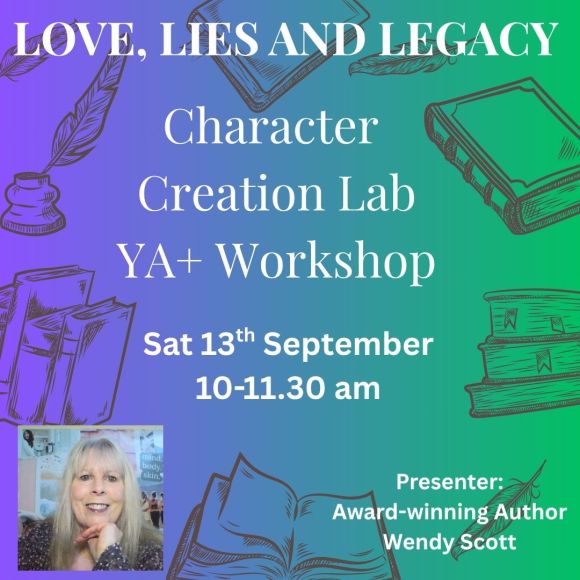
Workshop: Character Creation. Dive into the art of creating characters that leap off the page with personality and depth. Experiment with techniques to make your characters relatable and engaging.
Bill Marris Room, Māpua Community Hall and is open to everyone. Cost: Adults $20, Under 18 $10. Enquiries: Phone: 0223990075 or email: mapualibrarynz@gmail.com.
11:30-12:30pm: Michael Bennett (Ngāti Pikiao, Ngāti Whakaue), Carved in Blood – A gripping conclusion to the Hana Westerman trilogy and Stef Harris, two novellas under the title Girl From Sarajevo.
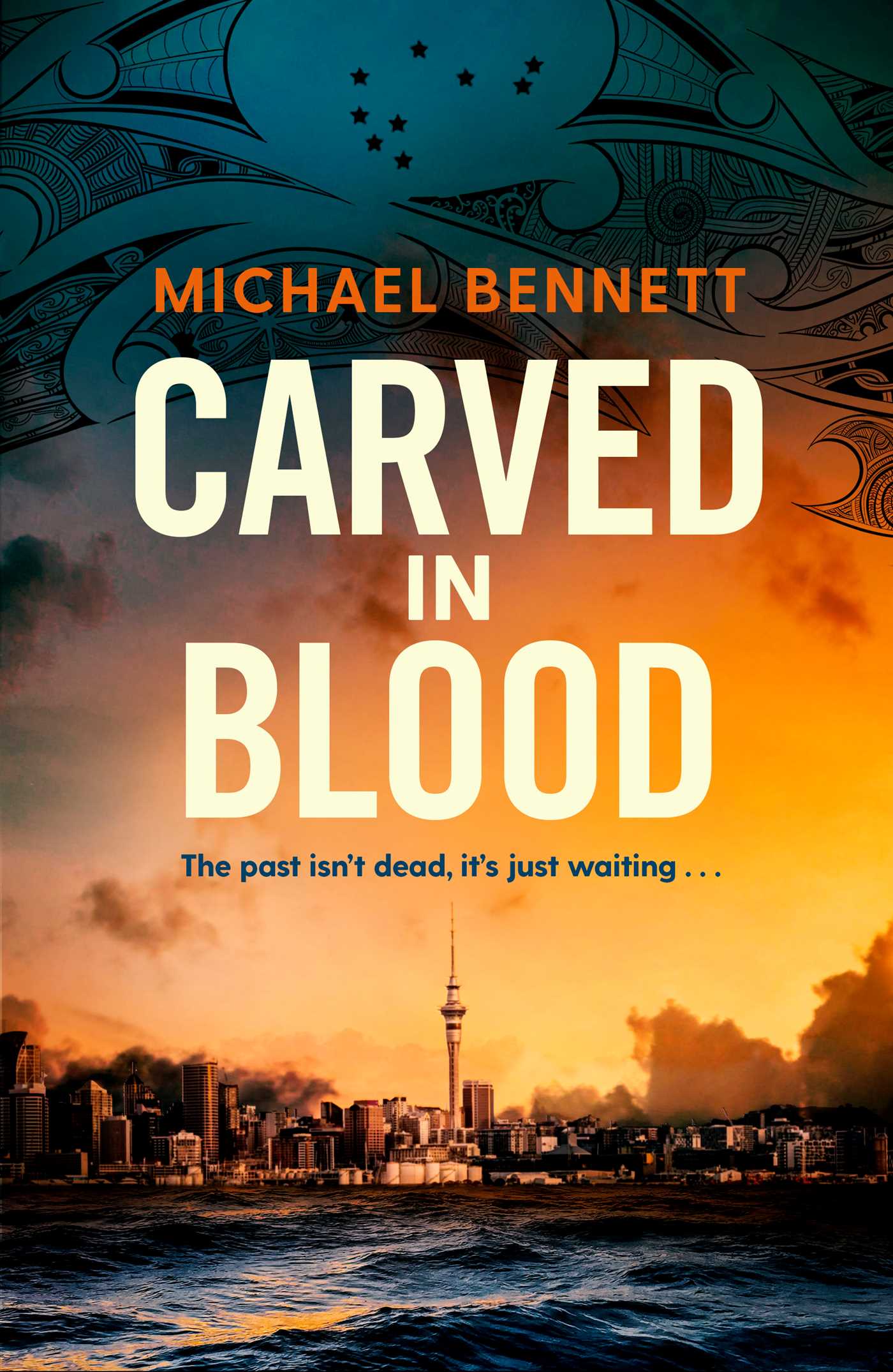
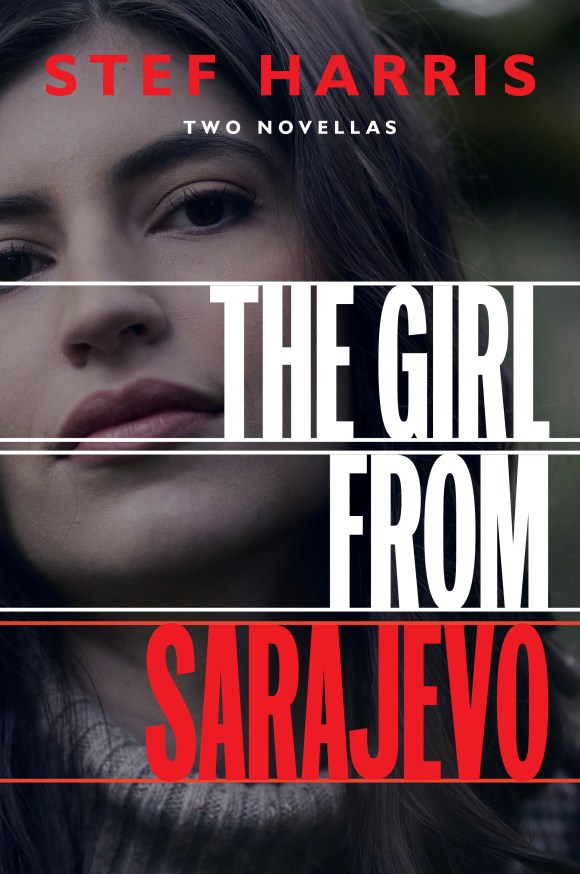
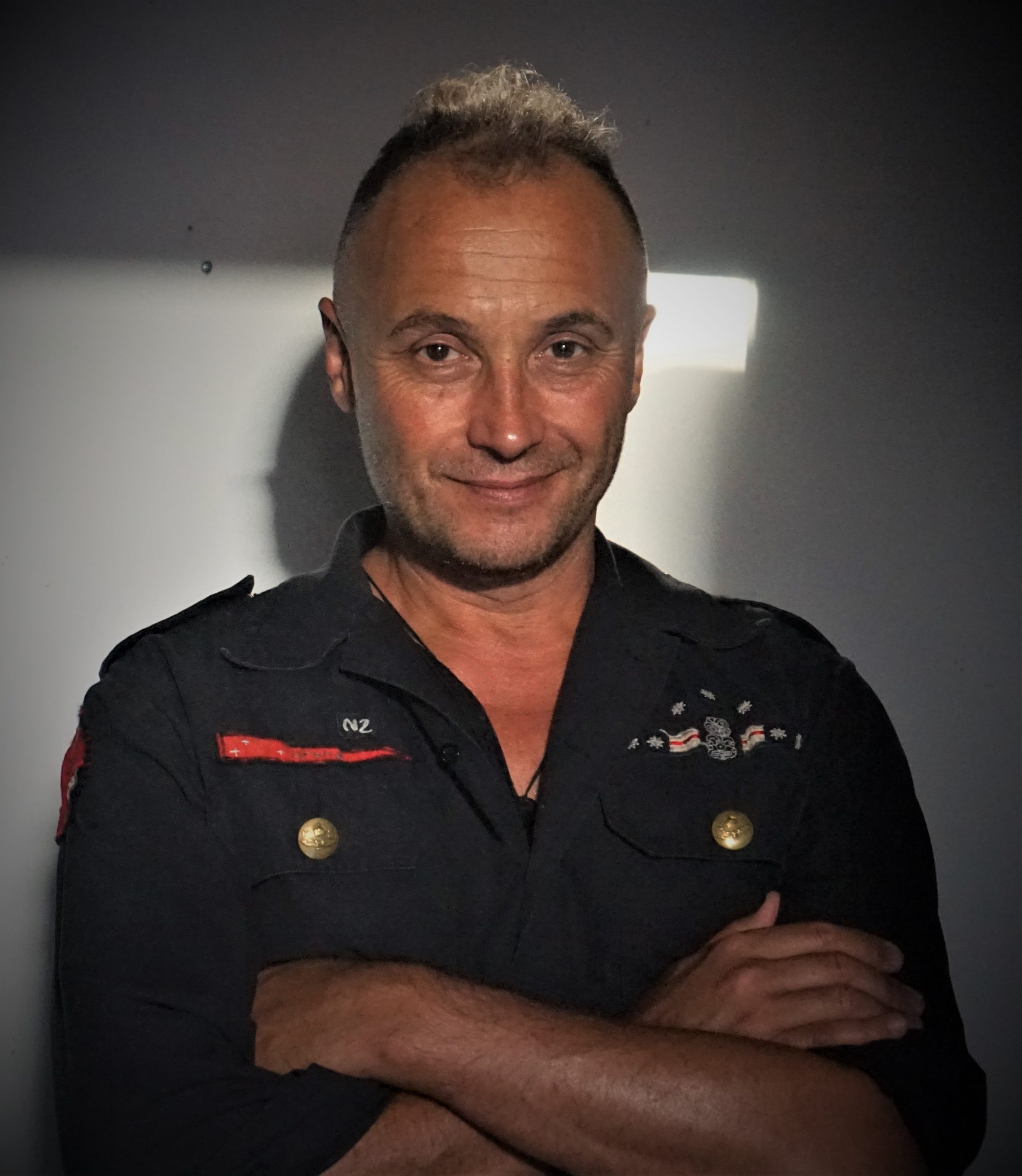
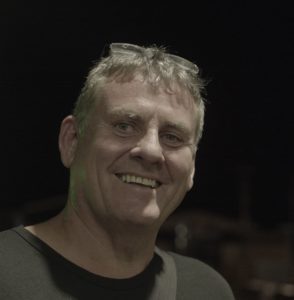
Conversationalist – Chris Stuart with Stef Harris and Michael Bennett. This lively interview sees crime writer Chris Stuart explore how fellow Ngaio Marsh Award authors portray New Zealand, and how gender, culture, and background shape their detectives and storytelling.
12:30-1:30pm: LUNCH
2:00-3:00 pm: Tom Rowling: Rolling Seas to Rowling Heights.

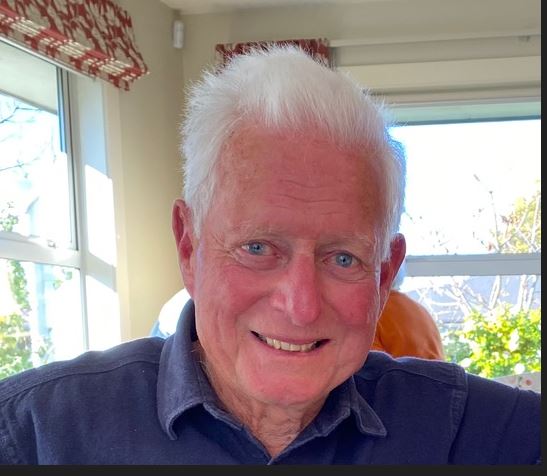
Rolling Seas to Rowling Heights tells the tale of young Tom Rowling’s first six years at sea, 1959–65, written to share experiences of a bygone age. Tom joined the Westhaven Shipping Company in March 1959 as a sixteen-year-old deck boy on a scow, a small wooden ship that traded around the coast of New Zealand. He progressed through the industry to second mate when he came ashore in December 1965 to start a water taxi business, ferrying holidaymakers from Kaiteriteri into Abel Tasman National Park.
Tom’s ancestor was the first European to set foot on Kaiteriteri Beach, after sailing with Captain Arthur Wakefield in 1841, and so Tom continues a long tradition of the Rowling name being present in Kaiteriteri.
Conversationalist – Steve Henry.
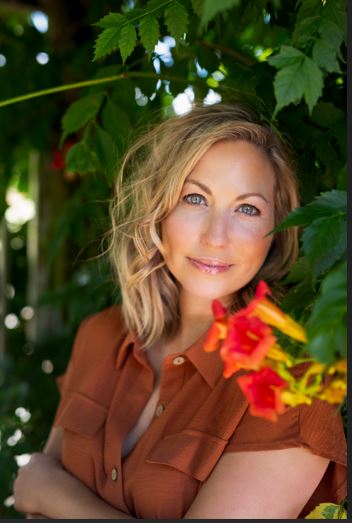
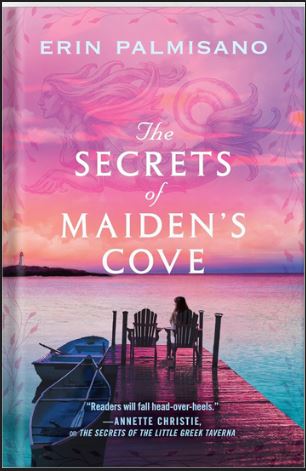
3:30-4:30pm: Erin Palmisano – latest release The Secrets of Maiden’s Cove. Conversationalist – Kerry Sunderland (afternoon tea & cake included in ticket).

From 5.30 – 6:30pm Drinks & Nibbles (cash bar)
6:30-9:30pm Poetry at Night “Verses of the Heart”, love, lies and lasting legacy. MC: Roger Lusby: 15-minute presentations commencing with Carol Don Ercolano, Henry Ludbrook, Mark Raffills, Emma Stevens, Rose Michel von Dreger, Warwick Stubbs, and Roger Lusby’s Ernest Shackleton.
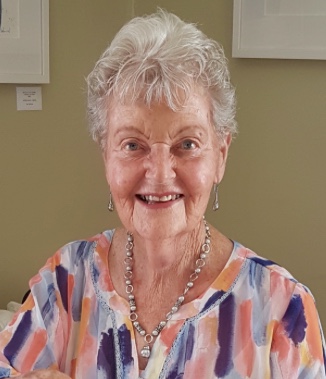
Carol Don Ercolano is a Nelson poet who has been published in a number of anthologies and
magazines both in New Zealand and overseas. She has written poetry since childhood but the NMIT Creative Writing Course also opened her to the genres of short story and writing for children. Carol has compiled and edited several anthologies and enjoys the analysis and appreciation of the written word almost as much as she enjoys writing and performing. She is a founding member of a local writing group, Boulder Writers, co-ran Nelson Live Poets for many years, and, for ten years, ran the Poetry in the Window Scheme, which involved selecting and displaying local poets’ work in shop windows in Trafalgar St, Nelson. She has been Guest Poet for a Top of the South Writers Writing Retreat, a Poetry Judge for the Golden Bay Lit Awards, and has given talks on poetry, including performing her own, to various groups. Carol’s background of primary school teaching, business ownership, and wide committee experience has given her the ability to listen, to respond and to enthuse others with her love of words.
Carol Don Ercolano is a Nelson poet who has been published in a number of anthologies and magazines both in New Zealand and overseas. She has written poetry since childhood but the NMIT Creative Writing Course also opened her to the genres of short story and writing for children. Carol has compiled and edited several anthologies and enjoys the analysis and appreciation of the written word almost as much as she enjoys writing and performing. She is a founding member of a local writing group, Boulder Writers, co-ran Nelson Live Poets for many years, and, for ten years, ran the Poetry in the Window Scheme, which involved selecting and displaying local poets’ work in shop windows in Trafalgar St, Nelson. She has been Guest Poet for a Top of the South Writers Writing Retreat, a Poetry Judge for the Golden Bay Lit Awards, and has given talks on poetry, including performing her own, to various groups. Carol’s background of primary school teaching, business ownership, and wide committee experience has given her the ability to listen, to respond and to enthuse others with her love of words.
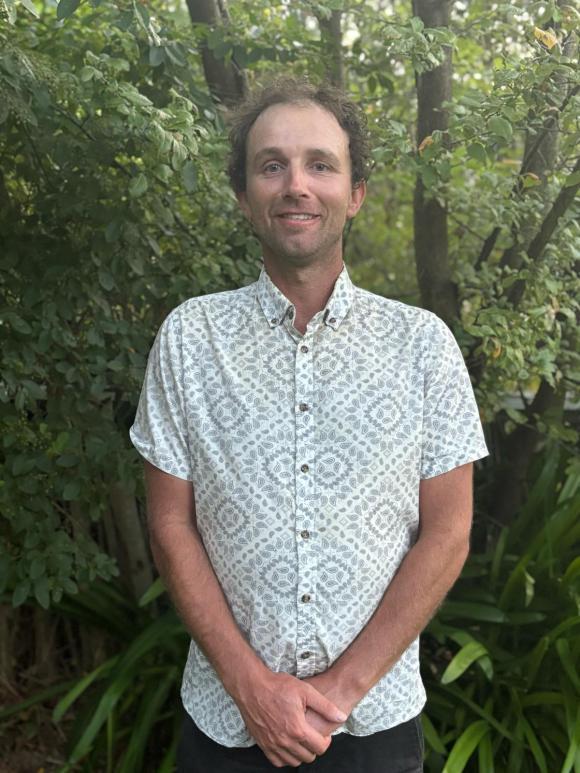
Henry Ludbrook
Henry is a Nelson-based poet who has been writing poetry since he was 16. Henry writes about his life with a raw, perceptive openness that is at once engaging and captivating. Henry writes to offer consolation to others who journey through the difficulties of life and to show the singular purpose of human suffering and the spiritual realisation that accompany it. There is humour and joy
and illumination for those who find Ludbrook’s poems a mirror to their own paths. Ludbrook writes with depth and lyrical skill that seems old and new at the same time. Ludbrook currently lives and writes in Nelson.
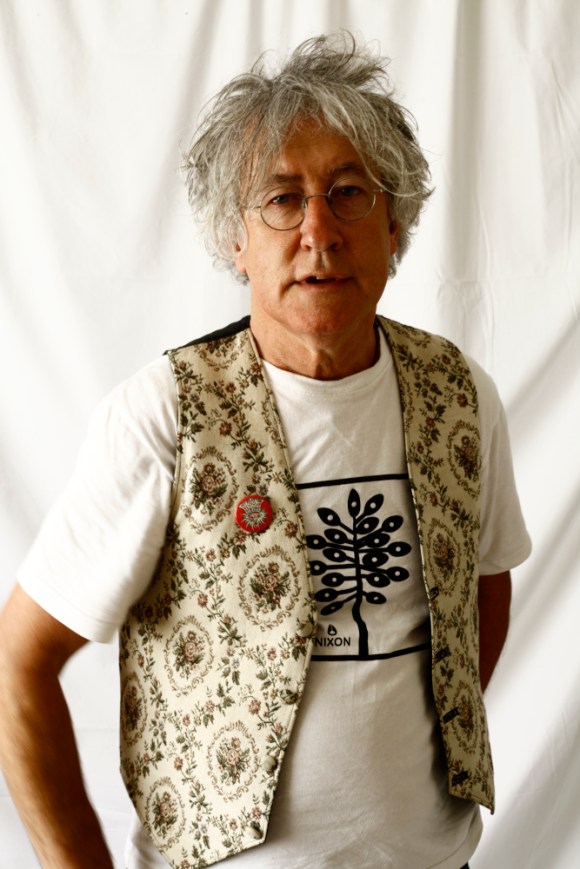
Mark Raffills
In the words of the late Dr Dermot Mora, author Albatross Blue:
“Raffills has the gift of the unexpected attitude, the original phrase, the original thought, that makes me rethink about my friends of the past, Curnow, Glover, Brasch for example, wordsmiths par excellence but somewhere passion missed out.”
And from the Nelson Mail’s Stewart Hunt: “His uncluttered and unpretentious performance makes the most of some striking words.”
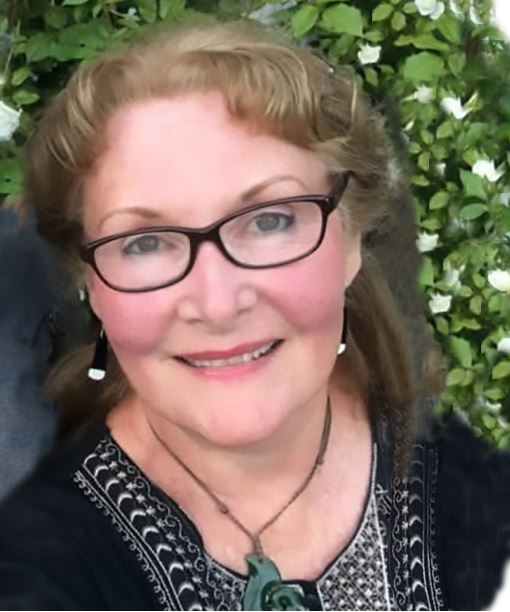
Christchurch-born and Whanganui raised, Emma Stevens is a retired teacher and author. She spent six memorable years in isolated villages in bush Alaska in the early 2000s, where bush planes provided access to the outside world and where small village communities rely on each other for survival. In 2007, she returned to Nelson and worked as a resource teacher in Motueka. Five years later while still teaching, she began writing about her Alaskan experiences. In 2013 Emma released Walking on Ice, her first book in the trilogy of memoirs describing the adventures, dangers and excitement of bush living while working with the Yup’ik Eskimo people. The second book about her Alaskan experiences, Nesting on the Nushagak followed two years later, and after popular demand she released the final book Dancing on the Tundra in 2016 in what then became an Alaskan trilogy. Since the release of her first book, she has been in demand, travelling with her husband throughout NZ and giving hundreds of talks as well as sharing artefacts about her time in Alaska.
Emma has recently completed her first novel, and begun writing poetry again. She lives with her husband in Tasman Village, surrounded by the orchards and vineyards of the stunning Upper Moutere area.
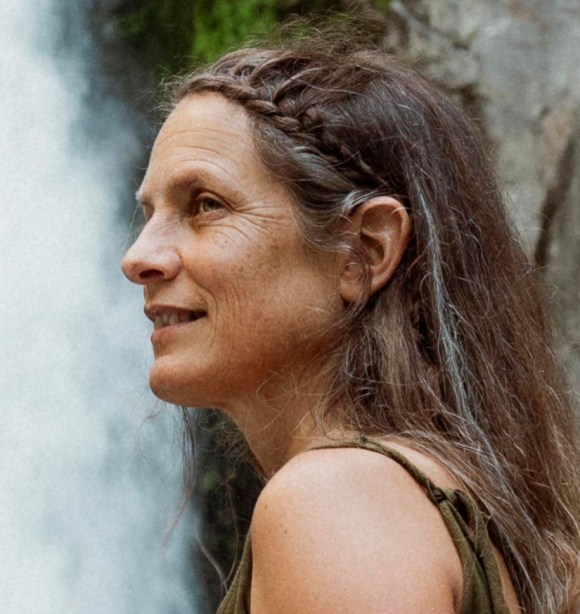
Rose Michel von Dreger won the Robert Burns Award for Poetry in Canada and in New Zealand was once asked to open for Sam Hunt. Her poetry has been exhibited in several multimedia exhibitions and toured the Top of the South Island in 2018 with Mark Raffills and Henry Ludbrook as ‘The Word, The Reckoning and The Rose’. She enjoys performing at the Mussel Inn in Golden Bay, especially with musicians such as Kristina Jensen, Jo Barlow, Galanjah and The Mad Hallelujah Tribe.
Warwick Stubbs is originally from Tūranganui-a-Kiwa, Aotearoa, and moved to Tasman in 2016. Since moving to Tasman, the spark of creativity leapt away from music composition and onto pages of poetry. In 2018, The Tasman Journey was completed, published and distributed in 2020; in 2024, the second book of poetry & prose Two Left Feet was published – a book Maggie Tweedie from RNZ’s Culture 101 referred to as “Brilliant” and said “there are so many beautiful scenes. There’s a real grounding sense of discovery in Two Left Feet”.

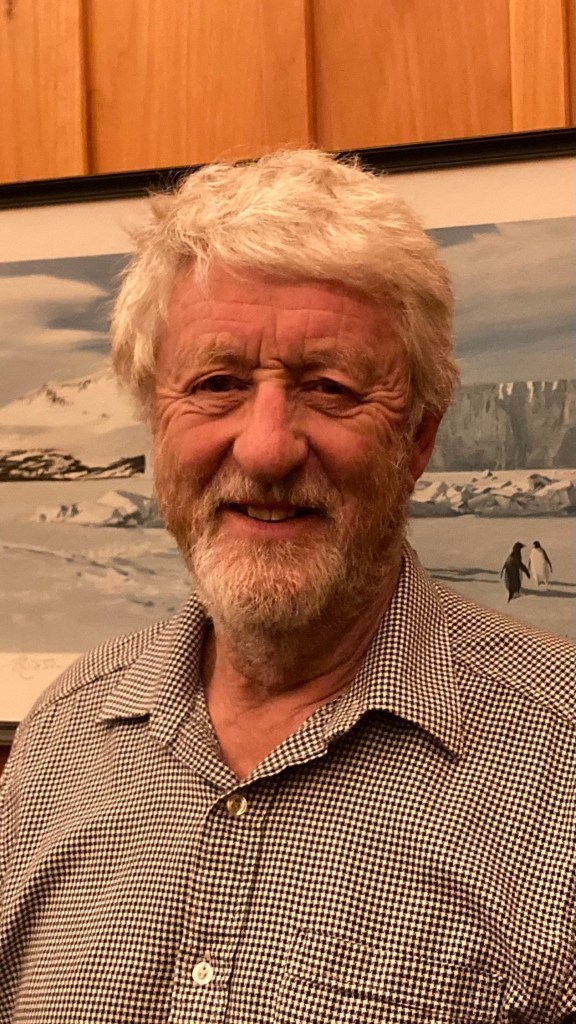
Roger Lusby began writing poetry as a result of space restrictions imposed by telegram communications when in Antarctica for the 1969/70 season. Now a published author, Roger has been encouraged to revisit the impact Antarctica had on his life. For this Festival, he will share a poetic audiovisual tribute to Sir Ernest Shackleton, with a condensed description of his 1914 expedition South and the loss of the Ship Endurance. This is also a teaser for Roger’s forthcoming one man show entitled ‘40 Years Below’ about his year on the ice. Now living in the top of the South with his wife Deirdre, they both enjoy the friendships gained from performing and promoting poetry and music.
Sunday 14th September. Day 2:
10.00am – 11.30am: Workshop by Wendy Scott.
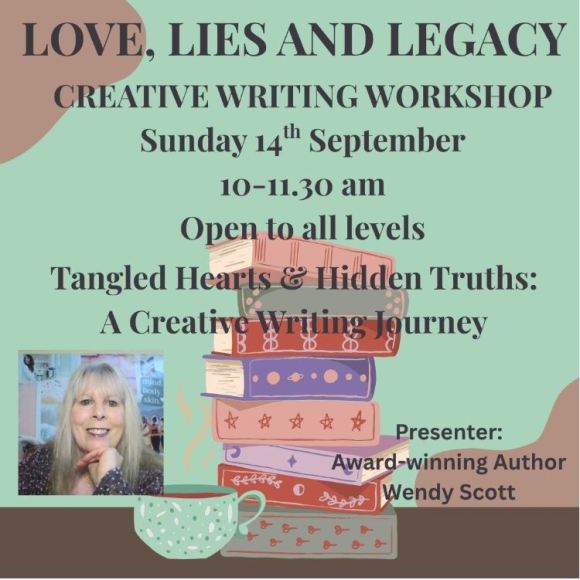
Workshop: Creative Writing based on Love, Lies and Legacy. Tangled Hearts & Hidden Truths: A Creative Writing Journey.
Ready to unleash your creativity? In this inspiring workshop, we’ll dive into the tangled emotions of love, the drama of deception, and the mark we leave behind. Through fun prompts and guided exercises, you’ll craft unforgettable characters and stories that stir the heart and spark the imagination. Perfect for beginners and seasoned writers alike!
Bill Marris Room, Māpua Community Hall and is open to everyone. Cost: Adults $20, Under 18 $10. Enquiries: Phone: 0223990075 or email: mapualibrarynz@gmail.com.
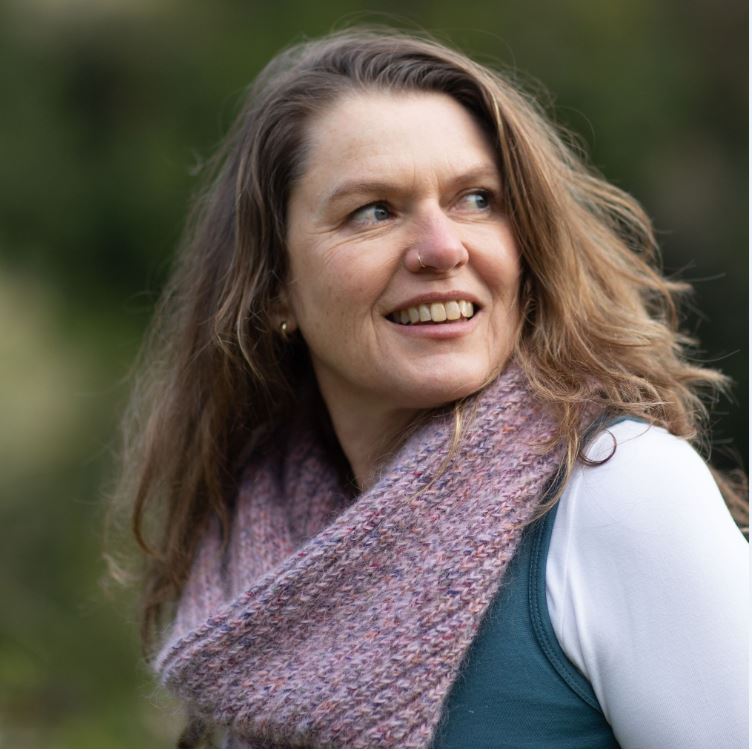
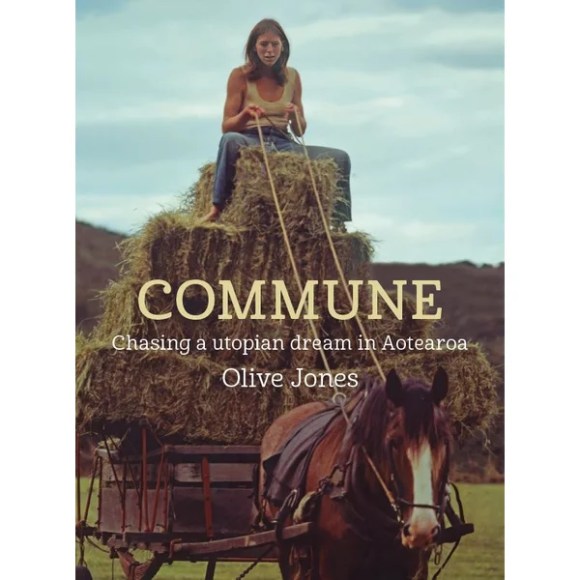
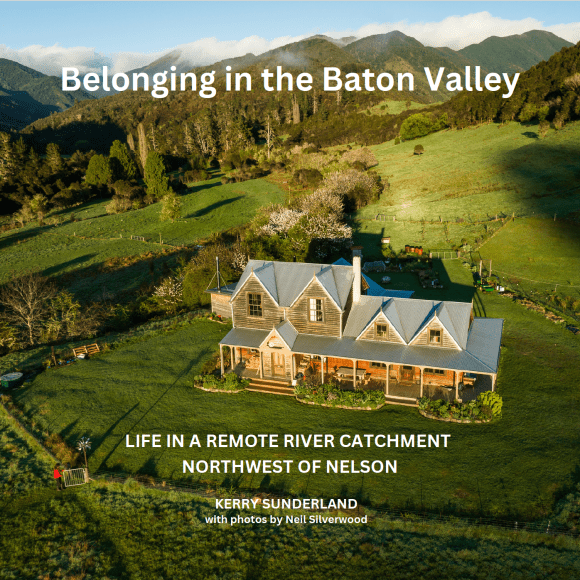
10.00-11.00am: Olive Jones, Anna Riedel and Kerry Sunderland. Conversationalist – Liz Price.
Join Liz Price and these three storytellers as they explore alternative ways of living in Aotearoa. From communes to cottagecore, their work reflects a shared longing for simplicity, sustainability and deeper connection to place and community. This conversation celebrates lives lived in harmony with nature and each other.
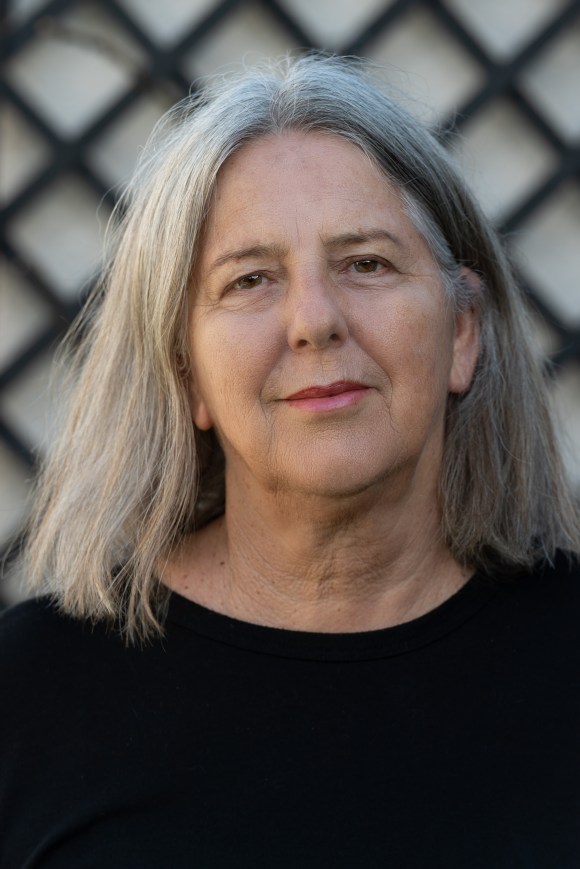
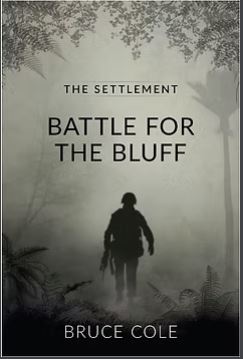
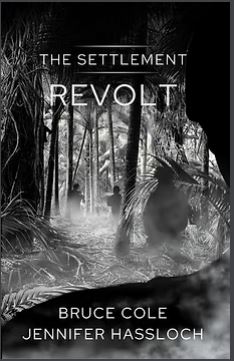
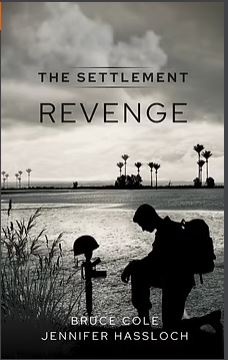
11.30-12.30pm: Bruce Cole & Jennifer Hassloch: The Settlement Series: Battle For the Bluff, Revolt, Revenge. First time novelist, Bruce Cole and his editor Jennifer Hassloch talk with Elaine Fisher about The Settlement series, how it came about, release of the second book and the third still to come.
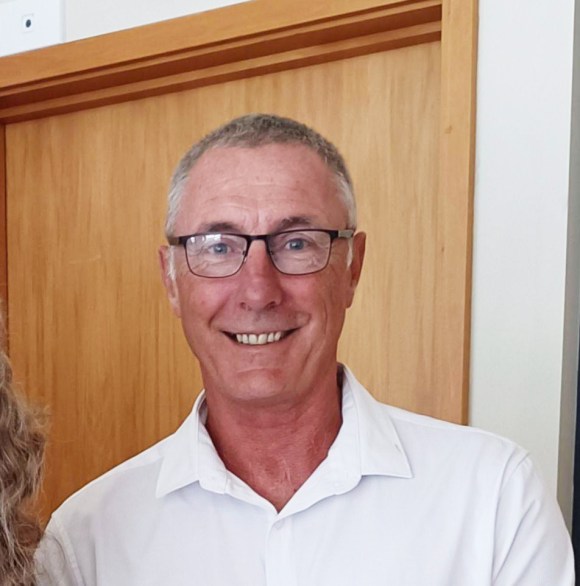
Bruce Cole
The Settlement trilogy, a dystopian fiction with story locations based along NZ’s South Island West Coast – Little Wanganui, Westport & Greymouth being central to this action-packed story with a distinct Kiwi flavour with characters who entertain the reader.
Battle for the Bluff, Revolt, & Revenge make up this dystopian fiction trilogy featuring Brad, a retired SASR soldier seeking peace in Little Wanganui. After a global EMP disaster, he trains locals to defend their homes. As tensions rise, Brad’s tough exterior cracks, revealing a flawed, determined man fighting for survival.
2nd book: Revolt
Revolt continues Brad’s story as he faces lingering threats and rising trauma after battling Scavengers. Forced back into conflict, he struggles with the lasting scars of survival. In Revolt, Brad faces new threats and old enemies after the battle for Little Wanganui. Haunted and on edge, he’s forced into conflict again.
Jennifer Hassloch
Bruce’s story instantly hooked me. As a former ICU nurse, I relate deeply, bringing human emotion, humour, and flow to his technical world — and ruthlessly cutting what doesn’t add value. Bruce had the vision; I brought emotional depth. My ICU background helped me shape authentic connections, humour, and narrative flow — and I’m ruthless about cutting anything that doesn’t serve the story.
Jennifer Hassloch
Bruce’s story instantly hooked me. As a former ICU nurse, I relate deeply, bringing human emotion, humour, and flow to his technical world — and ruthlessly cutting what doesn’t add value. Bruce had the vision; I brought emotional depth. My ICU background helped me shape authentic connections, humour, and narrative flow — and I’m ruthless about cutting anything that doesn’t serve the story.

Conversationalist: Elaine Fisher
12:30-1:30pm LUNCH
2:00-3:00pm: Jenny Pattrick – new release Sea Change.
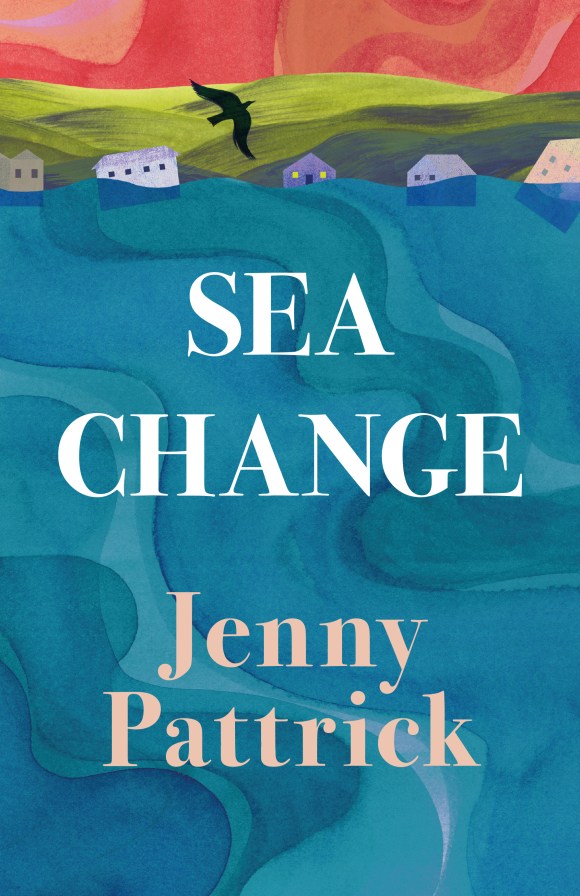
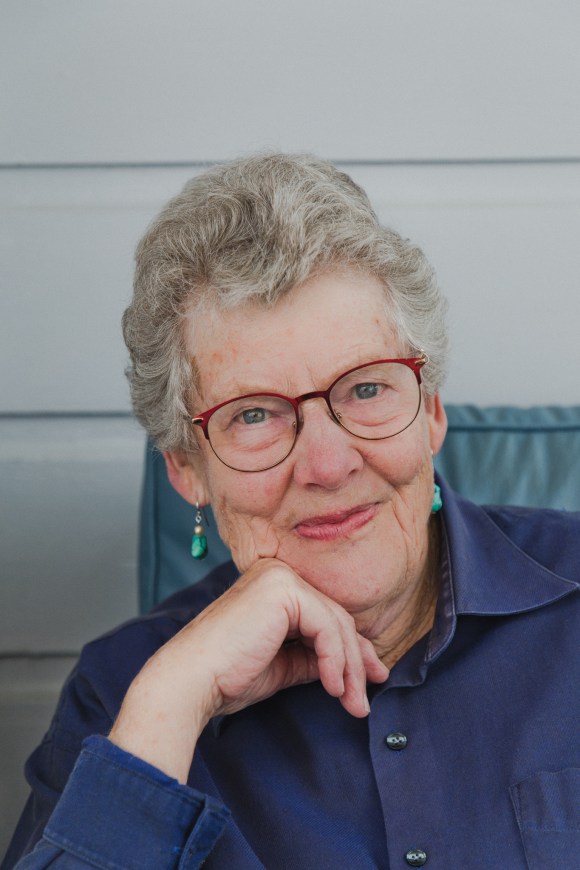
Novelist Nicky Pellegrino calls Jenny Pattrick, ‘one of this country’s most talented storytellers,’ and Jenny’s novels The Denniston Rose and its sequel Heart of Coal are amongst New Zealand’s biggest selling novels. This year, Bateman Books are very proud to be publishing Jenny’s contemporary fiction novel, exploring the impact on a small New Zealand seaside community after a natural disaster. This riveting and charismatic story of survival celebrates tenacity, self-sufficiency, and a fierce love of home, even against dire odds. Sea Change is a very topical story dealing with managed retreat issues. It also highlights the difference between rich and powerful and poor but resourceful citizens in present times where clever solutions are needed. Jenny’s closely observed characters, adept use of dialogue, and storytelling skills should make Sea Change a best seller.
Jenny Pattrick is a writer and former jeweller. Her jewellery is in private and national collections including Te Papa Tongarewa, National Museum of New Zealand. Her ten published novels include The Denniston Rose, its sequel Heart of Coal, Landings, Inheritance and most recently Harbouring which have all been New Zealand number one best sellers. She has written books and lyrics for several children’s shows, and this year she wrote the play Hope showing at the Circa Theatre in Wellington with a similarity to Sea Change as they both deal with current political problems and involve family and community relations. In 2009 she received the Mansfield Menton Fellowship. In 2011 she and husband, musician Laughton Pattrick, published the children’s book and CD of songs, The Very Important Godwit and in 1990 she was awarded an OBE for services to the Arts.
Conversationalist – Liz Price
3:30-4:00: Competition winners announced/ Final closing.
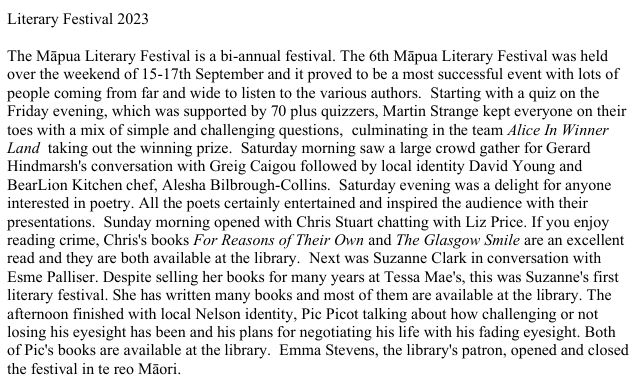
The Māpua Literary Festival celebrates the continued series of literary events being held in Māpua hosted by the Māpua Community Library. The festival enables the enhancement of the library’s facilities and collection of books and thereby improves services to the local community as well as increasing awareness of all aspects of literature and encouraging reading. All ticket sales go towards the library upkeep and purchasing books. The festival also provides a wonderful opportunity to promote local businesses, Māpua and its environs. Māpua is a delightful coastal village, 40 minutes’ drive from Nelson city. It’s well provided with great cafes, restaurants, things to do and wonderful accommodation, making it perfect for a literary weekend away.
SPECIAL THANKS TO ALL OUR 2025 SPONSORS

 mapuacommunitylibrary.com